01.
What does an Ayurvedic consultation include?
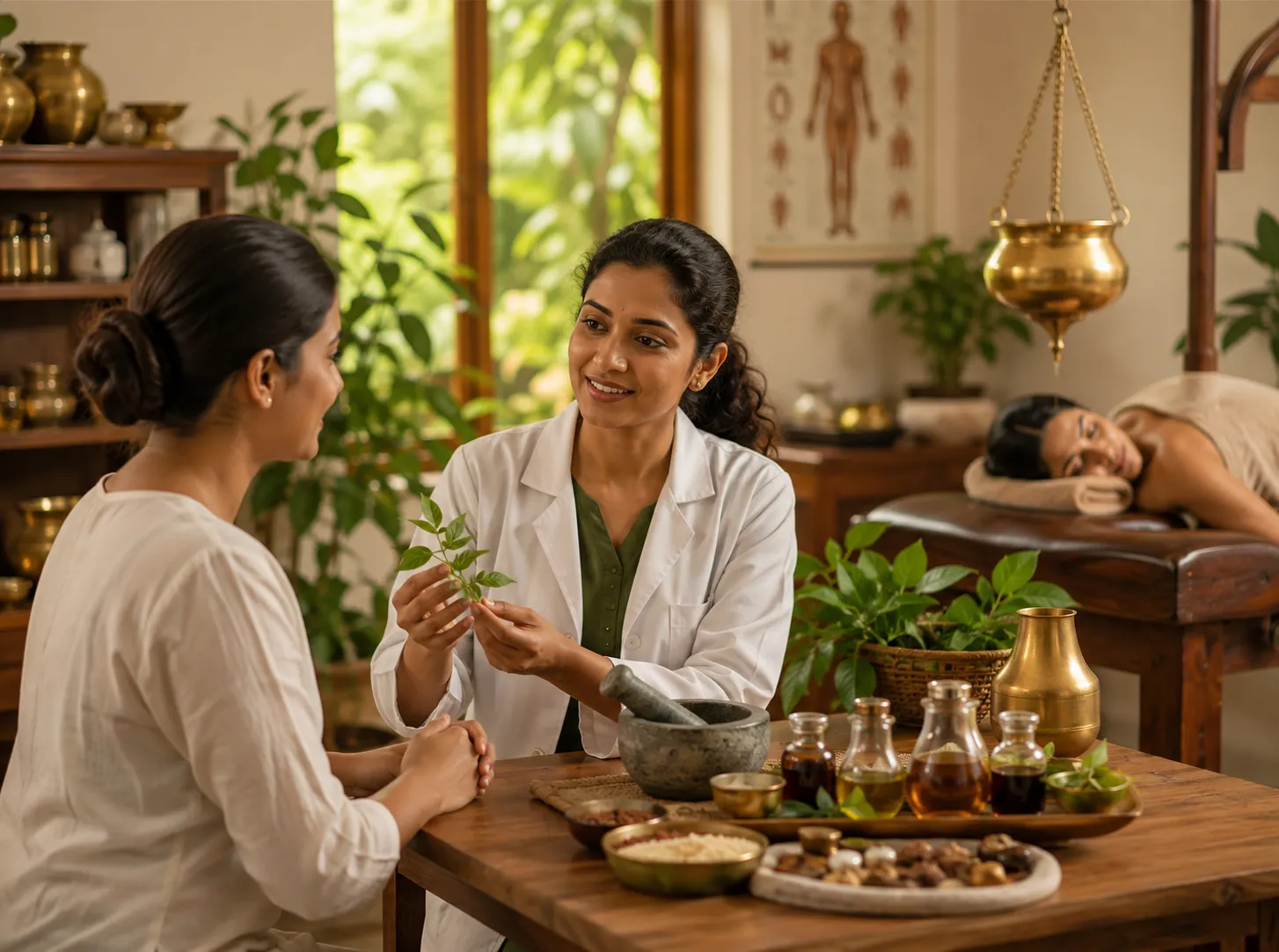
An Ayurvedic consultation typically begins with an assessment of your health concerns, lifestyle, daily habits, constitution (Prakriti), and other relevant factors. Your practitioner then recommends an individualized Ayurvedic care approach based on your needs.
02.
What Ayurvedic treatments does Sushrut offer?
Sushrut offers a range of Ayurvedic care options, including Panchakarma therapies, Shirodhara, Nasya, Basti, Virechana, Vamana, Raktamokshana, herbal medicines, and other traditional therapies. Treatment recommendations depend on the individual's condition and assessment.
03.
What is Panchakarma, and who may benefit from it?
Panchakarma is a traditional Ayurvedic therapeutic approach involving specific procedures selected according to an individual's constitution and health needs. A qualified Ayurvedic practitioner should assess whether Panchakarma is appropriate before treatment begins.
04.
How do I know which Ayurvedic treatment is right for me?
The appropriate Ayurvedic treatment depends on your health concerns, constitution, lifestyle, medical history, and treatment goals. A consultation with an Ayurvedic practitioner can help determine which therapies or supportive measures may be suitable.
05.
How long does Ayurvedic treatment take to show results?
The timeframe varies depending on the health concern, individual constitution, treatment plan, and consistency with recommended care. Ayurveda generally focuses on individualized, ongoing care rather than promising a fixed result or timeline.
06.
Are Ayurvedic medicines and herbal formulations safe to use?
Ayurvedic medicines and herbal formulations should be selected and used with appropriate practitioner guidance, particularly when you have an existing health condition or take other medicines. Do not start, stop, or change medication without consulting your healthcare professional.
07.
What should I expect during my first Ayurvedic consultation?
Your first consultation may involve discussing your health history, current concerns, lifestyle, diet, sleep, daily routine, and other factors relevant to Ayurvedic assessment. Your practitioner can then explain the recommended next steps and care options.
08.
Can Ayurveda be used alongside conventional medical treatment?
Ayurvedic care may sometimes be used alongside conventional healthcare, but this should be discussed with your healthcare providers. Tell your Ayurvedic practitioner about medicines, supplements, and treatments you currently use so potential interactions and safety considerations can be addressed.